
As a Black Lady, Brittney is likely safer in Russia than here seeing as her fellow humans vote AGAINST human decency at every election. Russia may be at long last a haven for Black Americans where their use of drugs is NOT encouraged. Who knew that Russia is a Black American Lady’s best friend. #EyeOpening


Arenewed sense of urgency has emerged for the release of WNBA All-Star Brittney Griner after her legal team revealed earlier this week that the Houston native had been transferred to a Russian penal colony to serve her sentence for drug possession. The concerning update came after a Russian court rejected an appeal of Griner’s nine-year sentence last month. The eight-time all-star center with the WNBA’s Phoenix Mercury and two-time Olympic gold medalist was convicted Aug. 4 after police said they found vape canisters containing cannabis oil in her luggage at a Moscow airport.
A diplomatic resolution has taken on new urgency after a Russian court rejected an appeal of her nine-year sentence last month. The eight-time all-star center with the WNBA’s Phoenix Mercury and two-time Olympic gold medalist was convicted Aug. 4 after police said they found vape canisters containing cannabis oil in her luggage at Moscow’s Sheremetyevo Airport.
Her arrest came at a time of heightened tensions between Moscow and Washington, just days before Russia sent troops into Ukraine, and the politically charged case could lead to a high-stakes prisoner exchange between Washington and Moscow.
Nancy Prince had to go to Russia to live out a classic American rags-to-riches story. A free black woman from Massachusetts, she struggled with racism and poverty. So in 1824, the 24-year-old sailed for St. Petersburg, joining her new husband who served in the imperial court. Soon Prince found herself meeting the czar and czarina in the palace’s gilded halls. She also became a successful entrepreneur and philanthropist, making baby clothing with the help of several employees and founding an orphanage.
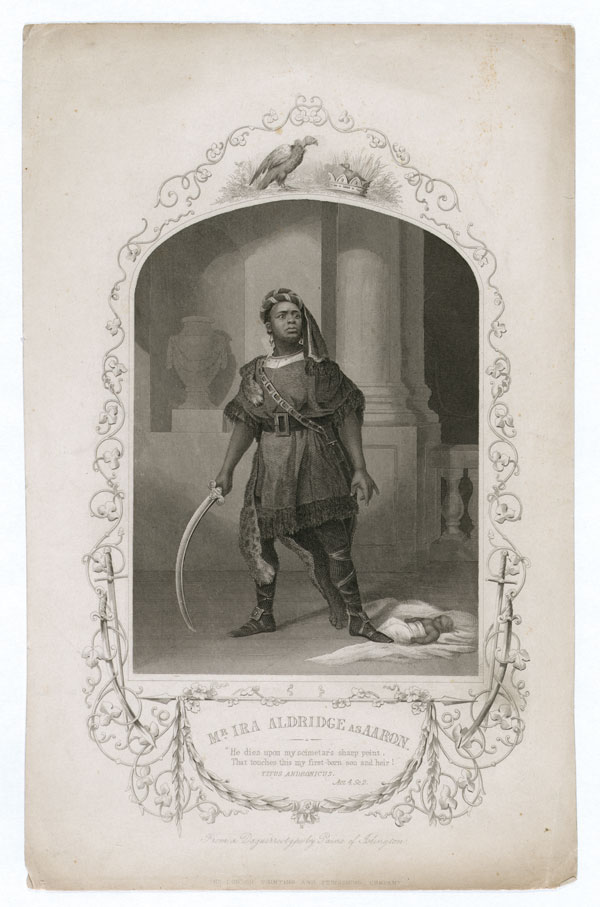
Free to succeed
Today Dunbar specializes in literature of the African Diaspora from the past two centuries. Her research covers topics ranging from the Afro-Cuban experience to the 1960s-1970s Black Arts Movement to the evolution of hip hop. But first, she had to find out why Russia appealed to black travelers more than a century ago.
The investigation fueled her dissertation and, after her arrival at UAB in 2013, a course on cultural and literary exchanges between African Americans and Russians. Last year, Dunbar’s work earned a Career Enhancement Fellowship from the Woodrow Wilson Foundation. The six-month fellowship, supporting junior minority faculty at universities nationwide, provided a mentor and resources to further Dunbar’s research.
The first, perhaps most obvious reason why black people went to Russia is that the country wasn’t part of the African slave trade, Dunbar says. There, they were free men and women. They also didn’t worry about being marginalized, thanks in part to Peter the Great, Dunbar notes.
Here in America, land of the free, Black Americans are oppressed on every side and by all other races and people DESPITE their myriad of contributions to the USA. The accomplishments of Black Americans are universally handed over to anyone besides Black Americans. Every one benefits off the labor, intellect, and talent of Black Americans EXCEPT Black Americans.
While we look abroad for acceptance, who thought that Russia would be the place. We have seen the racism against Blacks in Ukraine. We have seen the US government give billions of dollars to Ukraine while Americans are homeless in the streets by the millions.
Why did some black people leave? “You go into exile because of the way you’re treated at home, but you can still miss it,” Dunbar says. Prince, for example, a devout Protestant, never felt comfortable with the Russian Orthodox Church.
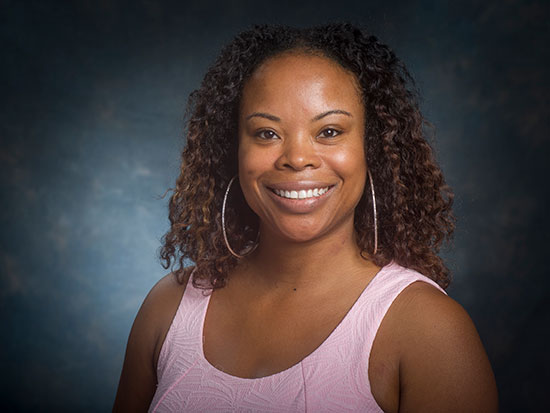
Jessie Dunbar, Ph.D.
More important, many black people hoped to transform their home countries after experiencing a different kind of treatment in Russia, Dunbar says. After nine years, Prince returned to America, where she opened another orphanage, joined an anti-slavery organization, and journeyed to Jamaica to teach and minister to former slaves. Said intended to go back to Africa but became a teacher in south Alabama. Aldridge, who spoke out against slavery to his audiences, planned to come home to the United States after the Civil War but died before he was able. Jessie Dunbar earned a prestigious fellowship from the Woodrow Wilson Foundation to further her research into black and Russian history.
These travelers left behind a cultural and political legacy, Dunbar says. “The Russian concept of ‘soul’ is similar to what black people refer to as ‘soul,’” she explains. Other researchers have noticed this, highlighting similarities between Russian and black literature. “Ralph Ellison’s novel Invisible Man borrows heavily from Fyodor Dostoevsky’s novella Notes from Underground,” Dunbar says. “These two different cultures separated by oceans have a similar approach, ideology, and thought process.” Both have been marginalized throughout history, labeled as uncivilized and backward, she adds. As a result, both literatures “are heavily influenced by western European views of them.”
Encounters between African Americans and Russian intellectuals also may have nudged the country closer to the 1917 revolution leading to the Soviet Union’s birth, Dunbar notes. Discussions of American slavery and the Civil War resonated with Russians wanting constitutional change and an end to the oppressive system of serfdom. They paid close attention to the insights and activism of African Americans, she says.
Thanks to the plight of Brittney Griner, I am looking more into Russia and I must say I am intrigued with what I am finding.
#ThankYouBrittneyGriner

| If we flip Brittney Griner’s situation to a positive – What does that look like really? Imagine a country that is devoted to the health and wealth of their citizens INSTEAD of the genocide of them? The concept INTRIGUES me. |
 Ms Coletha's Blog