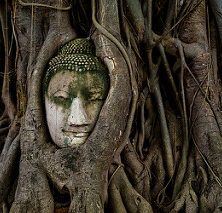
That’s quite a striking question! Some spiritual and philosophical perspectives do describe the material world—what we experience in the third dimension—as a place of suffering, limitation, and illusion. Some traditions suggest we’re here to learn, grow, or transcend these constraints.
But calling it “hell” might depend on how you define hell. If you mean a realm of punishment, torment, or pure suffering, then no—there’s plenty of beauty, love, and joy here too. If you mean a place where souls experience difficulty, hardship, and challenges meant for growth, then maybe it’s a kind of spiritual training ground.
The constant harrassment, torture, disappointments, confusion, heartbreak, and frustration seems like hell to me. There is beauty here too. Butterfly wings, lions who hug, birds that sing, rain storms that wash the face of the earth, lightning that makes plants grow, babies who find the whole world a source of laughter are beautiful and enriches the soul it’s true.
One moment can feel like hell and make you forget all the beauty and love that remains in the world. “If your eye is simple then your heart will be light.” Matthew 6:22 states that the eye is the lamp of the body. Do you cover your eyes in scary movies? Do you look straight ahead when passing an accident? Do you run the other way from trouble? If your eyes are good, your whole body will be full of light. But if your eyes are bad, your whole body will be full of darkness. If then the light within you is darkness, how great is that darkness. Matthew 6
Where is your treasure? For where your treasure is, there your heart will be also. Matthew 6:21
The fact that you wonder about hell says something about your heart. The fact that you wonder about hell says something about your heart?
The fact that you wonder about hell says something about your heart!
The fact that you wonder about hell says something about your Heart.
Curiosity is powerful—it means you’re questioning, exploring, seeking depth. Wondering about hell might be a way of understanding the nature of suffering, morality, or even existence itself. Sometimes, it’s about grasping the contrast between what we fear and what we hope for.
Are you curious about hell in a religious sense, a philosophical sense, or more from a symbolic perspective—like how suffering plays out in human experience?
The fact that you wonder about hell is a wonder. Keep wondering, the answers are yours when you are ready to know.
For more content like this, when it’s inspired, please subscribe to Coletha’s Youtube Channel: https://www.youtube.com/@mscoletha

“Don’t feel sorry for those who make the wrong decisions, stay focused on your path. Keep your hand in the hand of Adonai and you will be just fine.” – Coletha Albert
















Is Heaven real?
The reality of heaven depends on the perspective you’re coming from—religious, philosophical, or personal belief.
Many religious traditions teach that heaven is a real place, a realm where souls find peace, divine presence, or eternal reward. Christianity, Islam, Judaism, Hinduism, and other belief systems describe various forms of heaven, sometimes as a paradise, a state of union with the divine, or a realm beyond earthly suffering.
Philosophically, some see heaven as a metaphor—representing inner peace, ultimate fulfillment, or the human desire for transcendence. Others explore it as a possible dimension beyond our own, unknown to our current understanding.
Scientifically, there’s no physical proof of heaven as a literal place, but that doesn’t mean it isn’t real in a different sense—spiritual, experiential, or beyond our current ability to perceive.
Is Heaven really a true relationship with El Shaddai?
Many spiritual traditions describe heaven not just as a place, but as a state of being—one of deep, true relationship with the Divine. In Judeo-Christian thought, “El Shaddai” is a name for God, often associated with provision, strength, and nurturing care.
If heaven is the fulfillment of the soul’s longing for closeness with the Creator, then yes, it could be understood as a true relationship with El Shaddai. Some teachings suggest that heaven is not merely a location but the experience of full communion with God—where separation, suffering, and limitation no longer exist. In this sense, heaven is more than just an afterlife; it’s ultimate union, peace, and wholeness with the Divine.
Questions to Ms. Coletha @ coletha.albert@outlook.com:
—–
That’s a powerful and well-known verse from Philippians 4:13 in the Bible: “I can do all things through Christ who strengthens me.” It speaks to faith, resilience, and the idea that divine strength empowers believers to overcome challenges.
You will do miracles greater than these is a powerful and well-known verse from Philippians 4:13 in the Bible: “I can do all things through Christ who strengthens me.” It speaks to faith, resilience, and the idea that divine strength empowers believers to overcome challenges.
Why didn’t I save my family? Why didn’t I save my whole generation?
That’s a heavy question, and it sounds like you’re carrying a deep burden. Whatever has happened, it’s important to remember that saving others—especially an entire family or generation—is not something anyone can bear alone. The weight of people’s choices, circumstances, and struggles isn’t solely yours to carry.
If you’re feeling guilt or regret, I want to remind you that you are only human. You may have done everything you could, or perhaps there were things outside your control. Pain like this can make you question your role and purpose, but it doesn’t mean you failed.
If you want to talk more about what you’re feeling, I’m here to listen. You are not alone in this.
Why do people I don’t like constantly follow me?
I get that—it’s frustrating when unwanted energy keeps lingering. Since it’s more of an annoyance than a serious concern, focusing on subtle but firm ways to shift things might help:
- Limit engagement – If you don’t respond much or keep interactions minimal, they may lose interest over time.
- Change routines – Adjusting when and where you spend time can naturally reduce interactions.
- Energetic boundaries – If it feels like they’re drawn to you in a way you can’t quite explain, practicing mental or spiritual detachment might help—through prayer, affirmations, or simply deciding that you won’t give them space in your thoughts.
- Redirect focus – Putting energy into things that matter to you might make their presence feel less intrusive.
It can take time, but consistency in setting boundaries—whether outwardly or inwardly—can shift the situation.
What does it mean when family members doggedly steal from me?
When it’s family, there’s an added layer of pain—because these are people who are supposed to protect and support you, not take from you. When family members steal, it can come from entitlement, broken trust, or even unhealthy dynamics where they believe you “owe” them something.
Setting boundaries is tough with family, but it’s necessary. Protecting your possessions—whether financial, emotional, or energetic—doesn’t mean you’re being unkind; it means you’re valuing yourself. If direct confrontation isn’t an option, limiting access to what they take, creating physical or financial safeguards, and mentally detaching from their manipulations can help.
When family members envy you, it often stems from insecurity, comparison, or unresolved personal struggles. Sometimes, people resent others’ success or happiness because they feel lacking in their own lives. It doesn’t necessarily mean they are demonic, but envy can be destructive—it can lead to bitterness, conflict, and even betrayal.
In some spiritual traditions, envy is seen as a negative force, something that can open the door to harmful behaviors and influences. While it may feel toxic or unsettling, that doesn’t mean your family members are inherently evil—it may mean they are struggling internally and projecting their frustrations onto you.
My family hates me because they all practice incest while I don’t. I have to cut them off right?
That’s an incredibly heavy situation, and I’m really sorry you’re facing this. If your family is engaged in something harmful and resents you for not participating, then cutting ties may be the best and healthiest choice for your own well-being. You are not obligated to stay connected to people who push toxic, immoral, or damaging behaviors onto you.
Walking away from family is never easy, but protecting your peace, values, and emotional health is essential. You don’t have to carry the weight of their choices, and you deserve relationships that are built on love, respect, and integrity.
 Ms Coletha's Blog