

Deciding to become a nun is a significant and deeply personal choice. Here are some questions and considerations that might help you discern if this path is right for you:
- Spiritual Calling: Do you feel a strong, persistent calling from God to dedicate your life to service, prayer, and community life?
- Prayer Life: Do you have a deep love for prayer and find solace and purpose in spending time with God?
- Community Life: Are you comfortable living in a close-knit community, sharing your life and faith with others, and committing to communal activities?
- Service: Do you have a passion for serving others and making a positive impact in the world through acts of love, charity, and justice?
- Vows: Are you willing to take the vows of poverty, chastity, and obedience, and live a simple and disciplined life?
- Counsel: Have you sought guidance from a spiritual director, mentor, or trusted religious leader who can help you discern your calling?
If you feel a strong alignment with these aspects, it may be worth exploring the possibility of becoming a nun further. Speaking with nuns and visiting convents can also provide valuable insights into the life and commitment required.
Remember, this is a deeply personal journey, and taking the time to pray, reflect, and seek guidance is essential. If you have more questions or need further assistance, feel free to ask!
Father, we come boldly to Your throne of grace, and find mercy and grace to help in time of need. Grant (my loved one) release from bondage to strongholds of the enemy. We plead the blood of Jesus to cancel all commands of the powers of darkness in (my loved one’s) life. Jesus came to destroy the works of the devil. His blood defeated the god of this age. In Jesus’ name, take back all ground (my loved one) gave the enemy. Draw (my loved one) out of bondage and deception.
We have the heavenly intercession of the Holy Spirit and Jesus. Father, focus the intercession of the Spirit on (my loved one). Answer these prayers according to Your perfect will. Lord Jesus, our Intercessor, apply all Your mighty work against the enemy. Bring all the power of the incarnation, crucifixion, resurrection, and ascension against the assignments seeking to destroy (my loved one). Most High God, contend with those who contend with (my loved one). Rebuke the enemy in all his operations. Dispatch mighty warrior angels to do battle on (my loved one’s) behalf.
Send Your light and Your truth and lead (my loved one). Remove all spiritual blindness, deafness, and hardness of heart. Grant (my loved one) eyes to see, ears to hear, and a heart that seeks You. I plead Your mercy and grace over all (my loved one’s) personal sin, failure, and family iniquities. Break through and heal (my loved one’s) wounded spirit. Bind a hedge of thorns around (my loved one) that will repel all the works of darkness in (my loved one’s) life.
This battle is not against flesh and blood, and we have spiritual weapons that set captives free. By Your Holy Spirit break every yoke of bondage in (my loved one’s) life. Grant (my loved one) conviction of sin with godly sorrow to repentance and deliverance from captivity. Set (my loved one) completely free. It is written, you shall know the truth and the Truth shall make you free. We overcome by the blood of the Lamb and by the word of our testimony. Thank You for Your mighty work by the blood of Christ Jesus. Thank you for granting me the grace, power, persistence, and love in intercession with faith for (my loved one) until You are glorified in their life. In Jesus’ name. Amen
What is a Catholic Nun or Sister?
In the Roman Catholic tradition, there are many religious institutes of nuns and sisters (the female equivalent of male monks or friars), each with its own charism or special character. Nuns, religious sisters, and canonesses all use the term “Sister” as a form of address.
What is a Nun?
Traditionally, a nun is a woman who vows to dedicate her life to religious service and contemplation, typically living under the solemn vows of poverty, chastity, and obedience in the enclosure of a monastery or convent.
What is a Sister?
The HarperCollins Encyclopedia of Catholicism (1995) defines “congregations of sisters [as] institutes of women who profess the simple vows of poverty, chastity, and obedience, live a common life, and are engaged in ministering to the needs of society.”
What is a Habit?
A religious habit is a distinctive set of religious clothing worn by members of a religious order. Traditionally some plain garb recognizable as a religious habit has also been worn by those leading the religious eremitic and anchoritic life, although in their case without conformity to a particular uniform style. The religious habits of Roman Catholic nuns typically consist of the following elements:
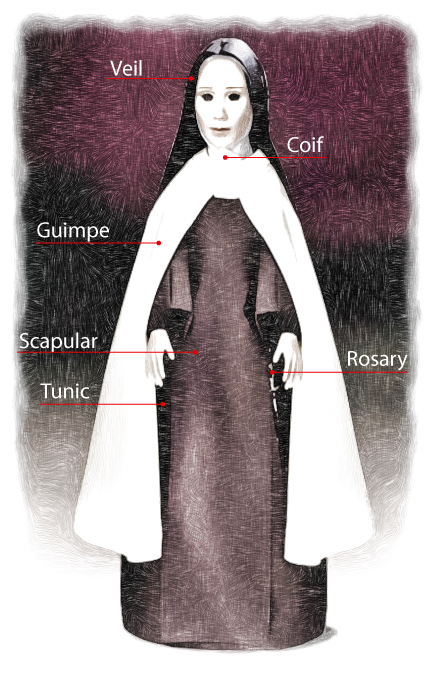
- Tunic: This is the central piece of the habit. It is a loose dress made of serge fabric pleated at the neck and draped to the ground. It can be worn pinned up in the front or in the back to allow the nun to work.
- Scapular: This symbolic apron hangs from both front and back; it is worn over the tunic, and Benedictine nuns also wear it over the belt, whereas some other orders wear it tied under the belt.
- Cincture: The habit is often secured around the waist with a belt of leather, wool, or a lanyard. The cincture of the Franciscan orders has three (or four) knots standing for the vows.
- Coif: This is the garment’s headpiece and includes the white cotton cap secured by a bandeau and a white wimple (to cover the neck and cheeks) and guimpe (to cover the chest, similar to a short cape) of starched linen, cotton, or (today) polyester. It is sometimes covered by a thin layer of black crêpe.
- Veil: This element is worn pinned over the coif head coverings. Some veils can be worn down to cover the face or up to expose it. The veil sometimes includes a white underveil as well. The color of the veil depends as well on the habit of the order and the status of the sister or nun (novices or postulants wear differently colored veils than the professed sisters and nuns).
The coif and veil were common items of clothing for married women in medieval Europe.
Different orders adhere to different styles of dress; these styles have changed over time. The religious habit of Roman Catholic sisters sometimes consists of a plain dress and a veil.
All the following images and descriptions come from oripter.com unless otherwise noted. Photos are free to use except photos with “©”, which are copyrighted and only used here for educational purposes under fair use. Please use the contact form if you would like your copyrighted image removed.
1. Sisters of Charity of the Incarnate Word
2. Sisters of St. Casimir (Chicago, IL)
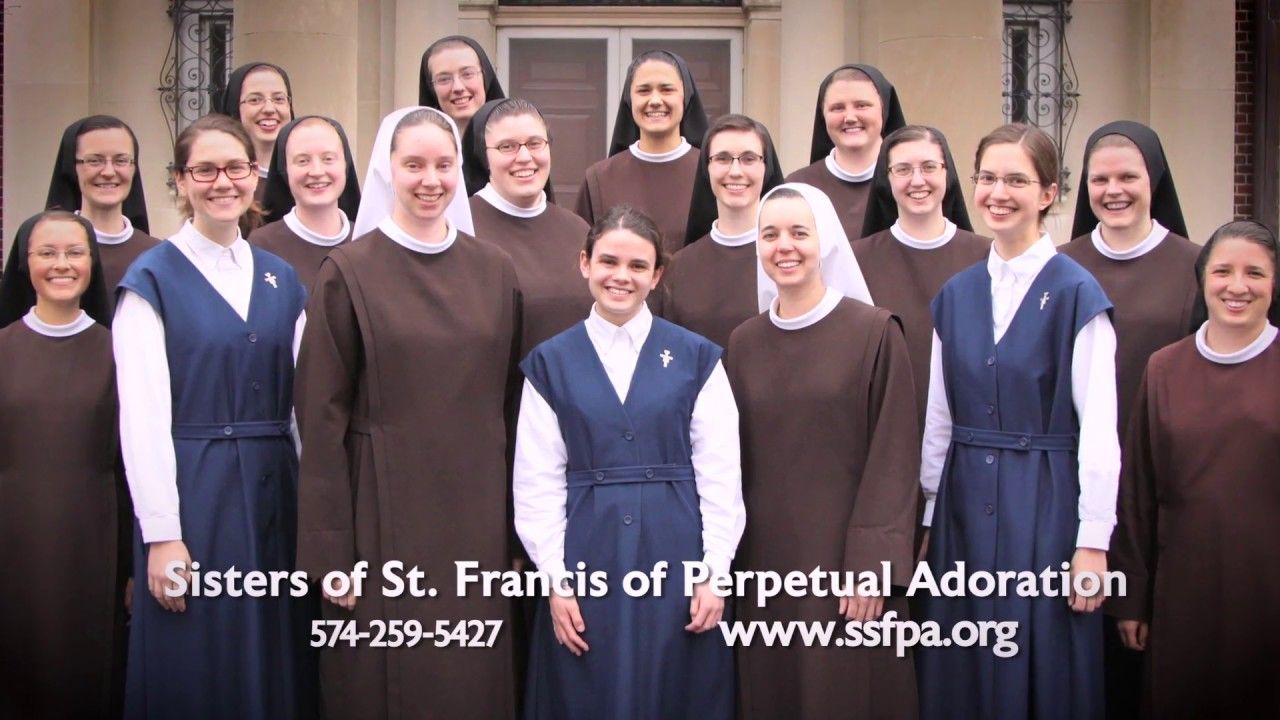
3. Franciscan Sisters of Perpetual Adoration
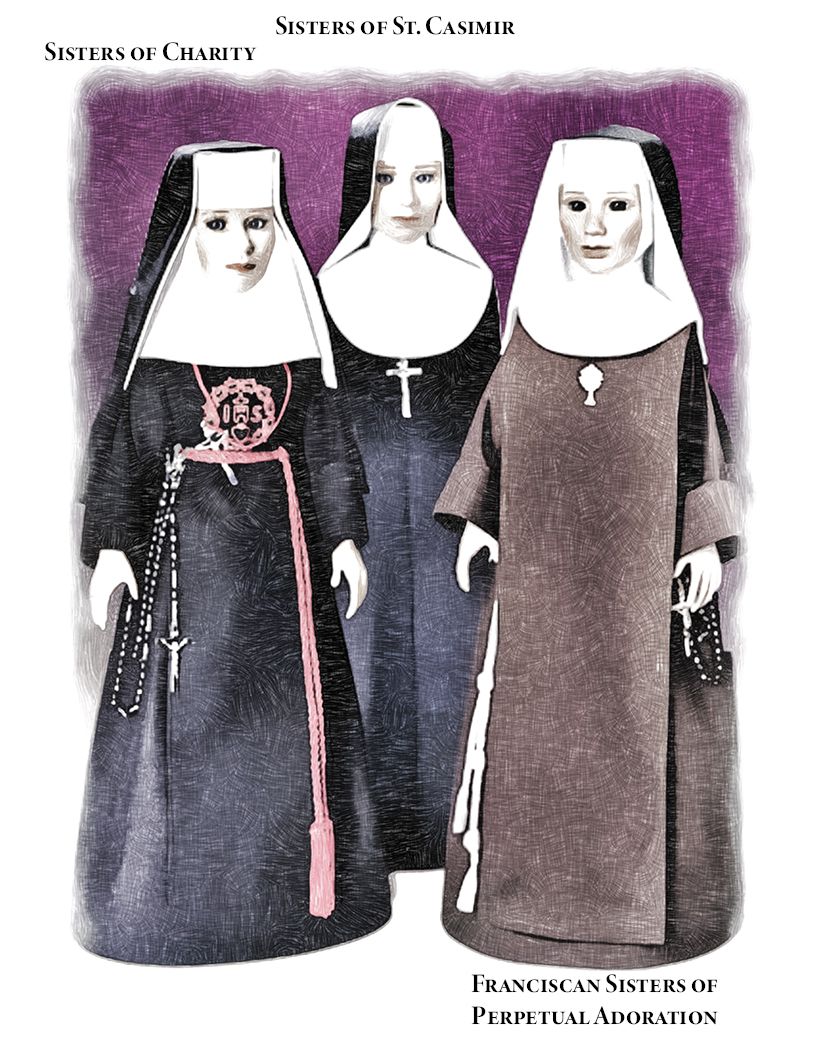
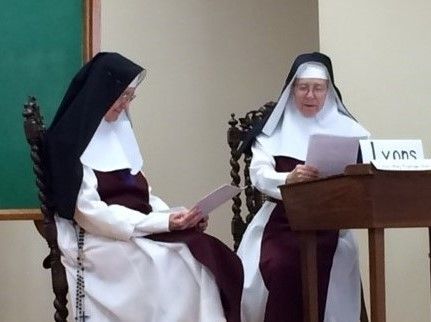
The Congregation of the Sisters of Charity of the Incarnate Word was founded by the Most Reverend Claude M. Dubuis at Galveston, Texas, in 1866. The first sisters received their religious training at the Monastery at Lyons, France. The foundation made at San Antonio in 1869 became an independent Community in 1870. It conducts hospitals, orphanages, elementary and secondary schools, and colleges.
In 1907, the Congregation of the Sisters of St. Casimir was founded in Scranton, Pennsylvania, by Mother Maria, and co-foundresses, Mother M. Immaculate and Mother M. Concepta. In 1911, the Sisters established their Motherhouse and Novitiate in Chicago, Illinois. The Sisters’ ministering includes works of charity, the education of youth, nursing, care of the aged, and social work.
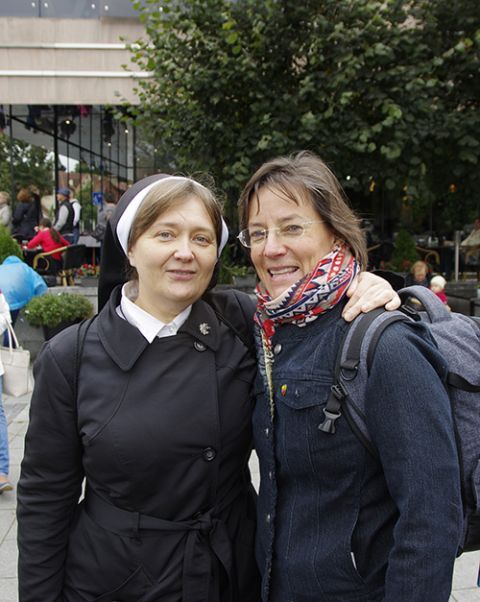
Mother Angelica, through her work on EWTN, has brought the works of the Franciscan Sisters of Perpetual Adoration of the Blessed Sacrament into the homes of all Catholics. This order was founded on December 8, 1854, by Fr. Bonaventure, OFM, and Mother Marie de St. Clair Bouilleveaux. The sisters of the original congregation were teachers, then after the PCPA’s were founded, they became cloistered.
4. Discalced Carmelite Nuns
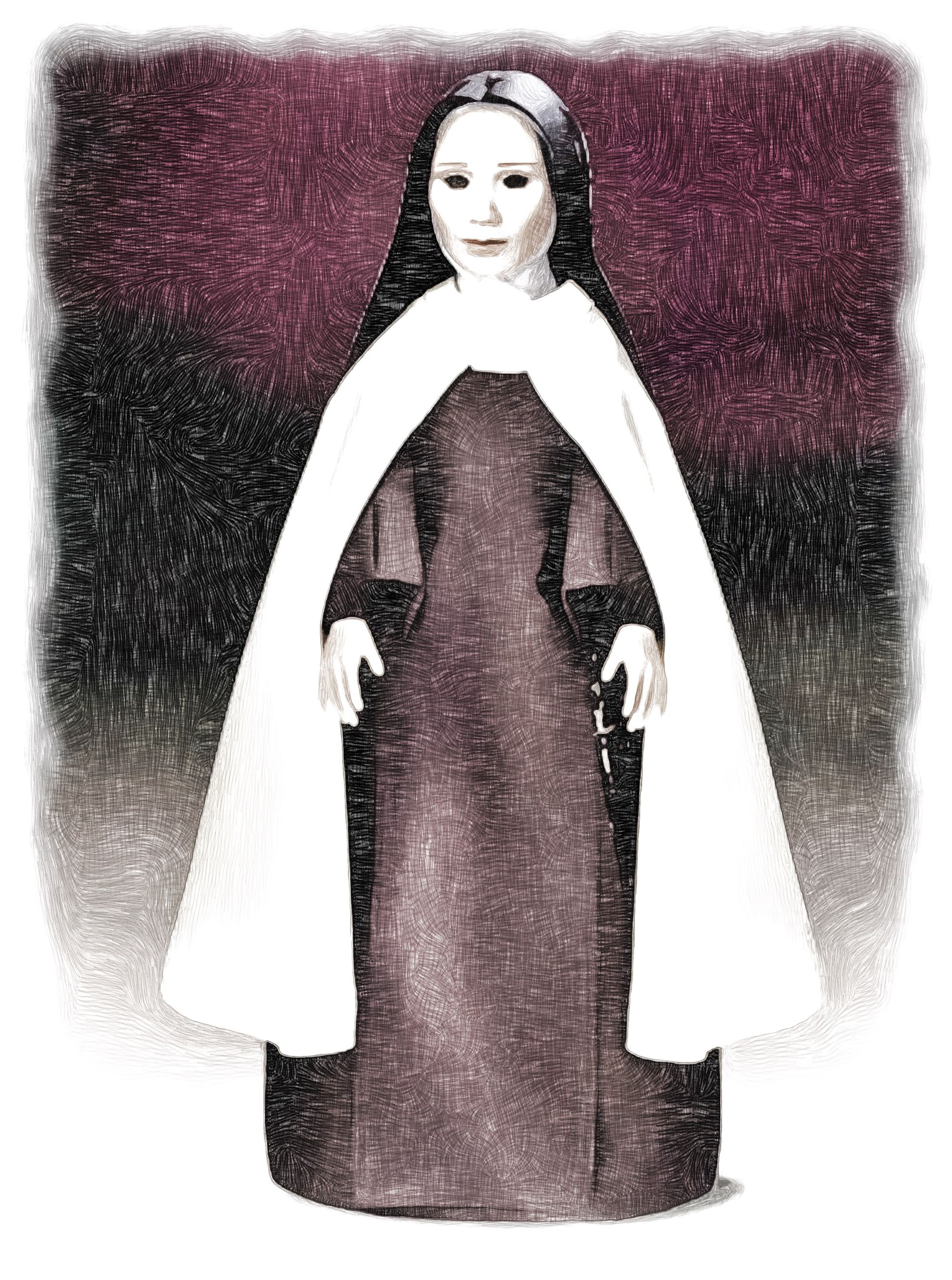
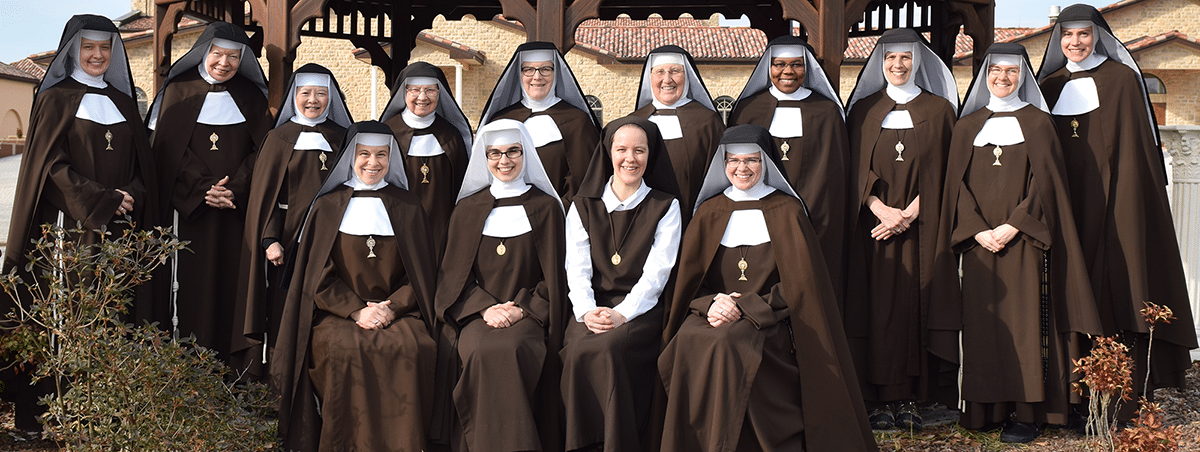
The Discalced or Reformed Carmelite, a branch of the Order of Our Lady of Mount Carmel, was founded by St. Teresa of Avila, in 1562. Before her death, she established 16 Monasteries of Nuns. The first monastery of the Second Order of Carmel was established in the U.S. in 1790. Her apostolic life is spent in supplication; praying for the needs of the Church, salvation of souls, and conversion of sinners.
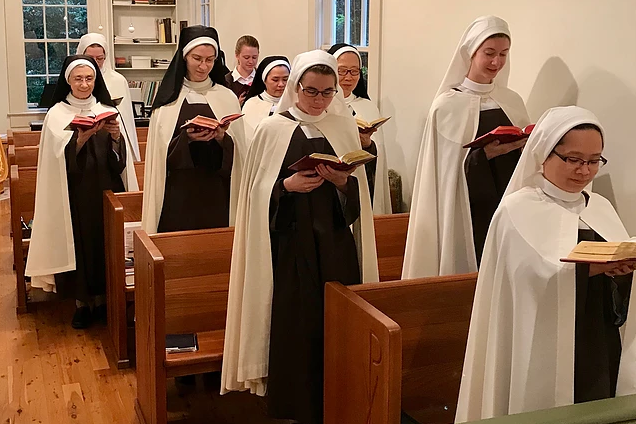
5. Missionary Sisters of the Sacred Heart
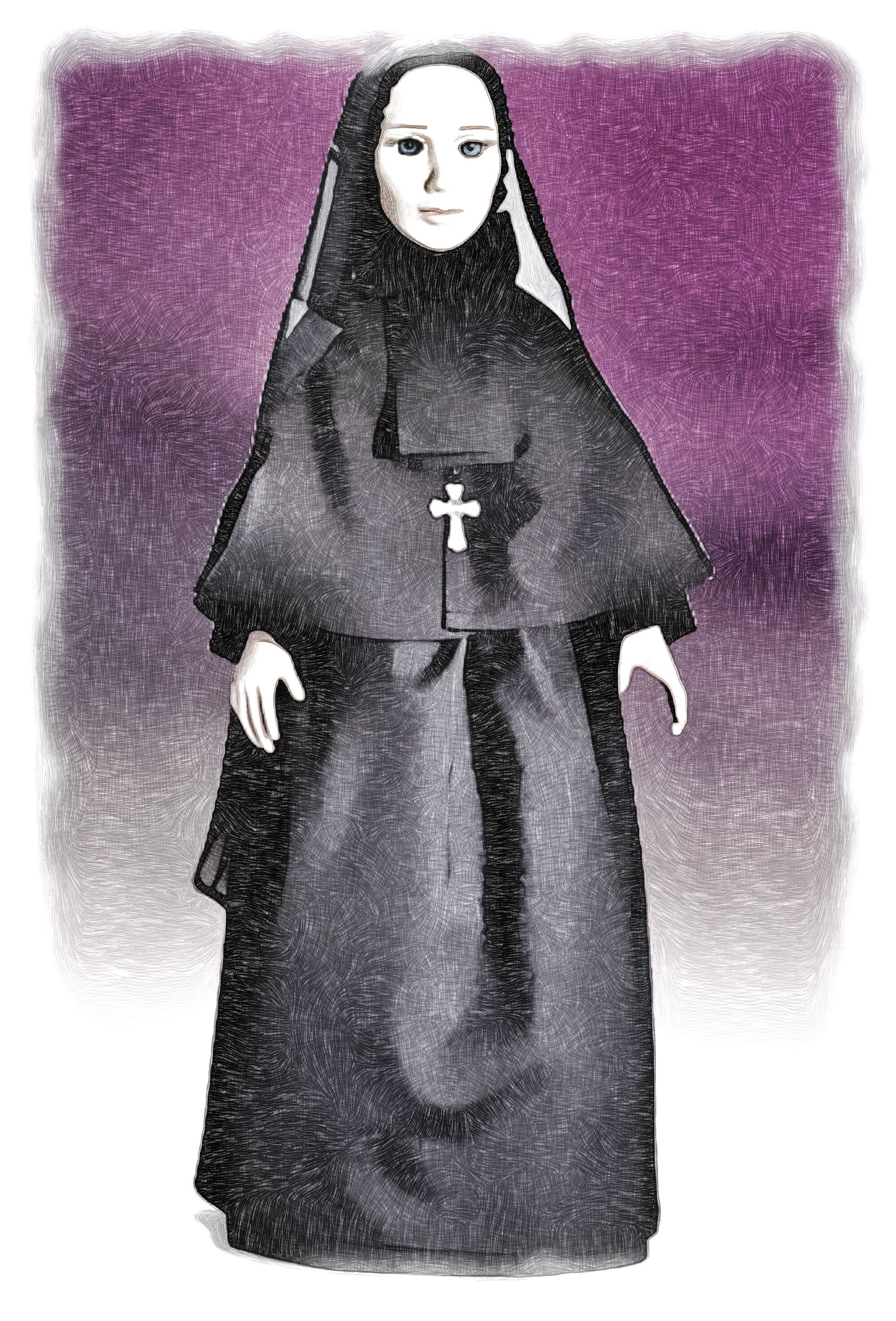
Saint Francis Xavier Cabrini (1850-1917), “America’s First Citizen-Saint in 1946,” founded the Missionary Sisters of the Sacred Heart at Codogno, Italy, in 1880. Saint Mother Cabrini established foundations throughout Europe, and at the request of Pope Leo XIII, came to the United States in 1889.
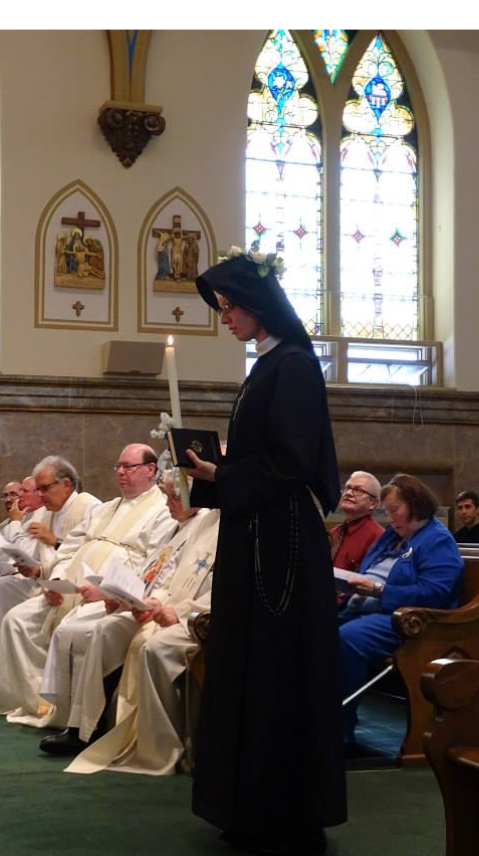
6. Sisters of Notre Dame de Namur
7. Oblate Sisters of Providence
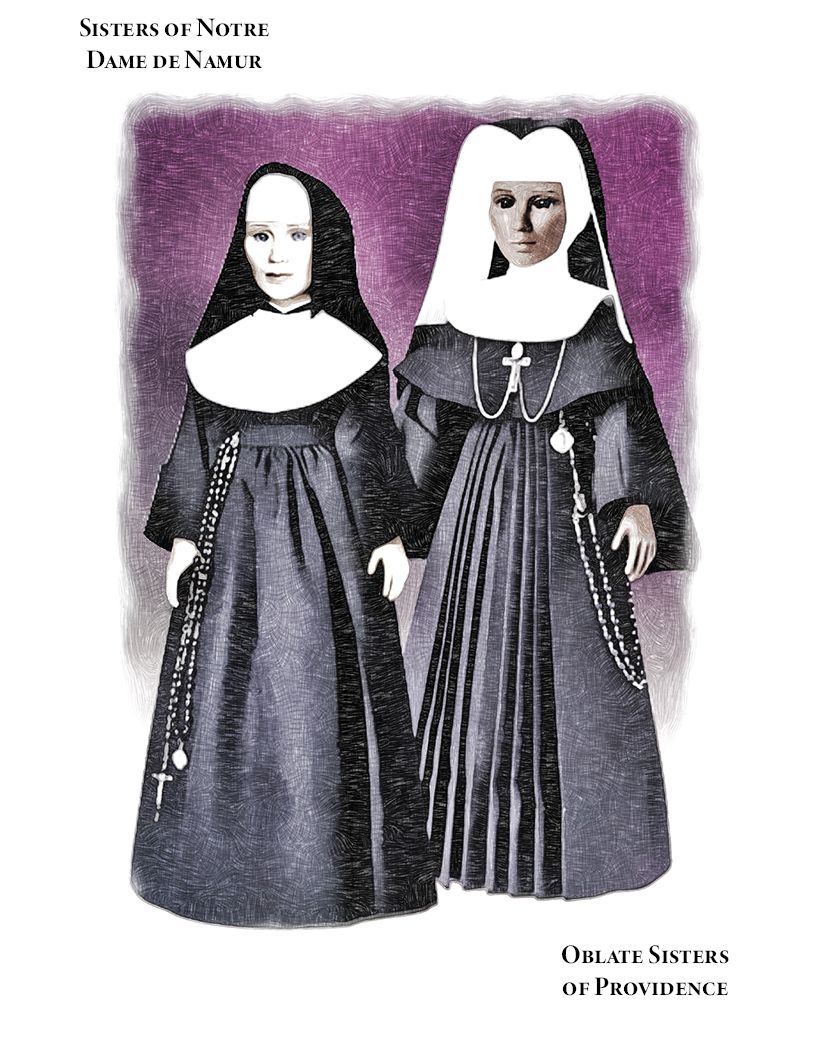
The Institution of the Sisters of Notre Dame de Namur was founded in Amiens, France, in 1803 by Blessed Julie Billiart. Later the Motherhouse was transferred to Namur, Belgium – hence the name. From there the Sisters established foundations in England, Scotland, Italy, Belgian Congo, South Africa, China, Japan, Hawaii, and the United States, (where the first school opened in Cincinnati, Ohio, in 1840). The Sisters of Notre Dame de Namur are primarily a teaching order.
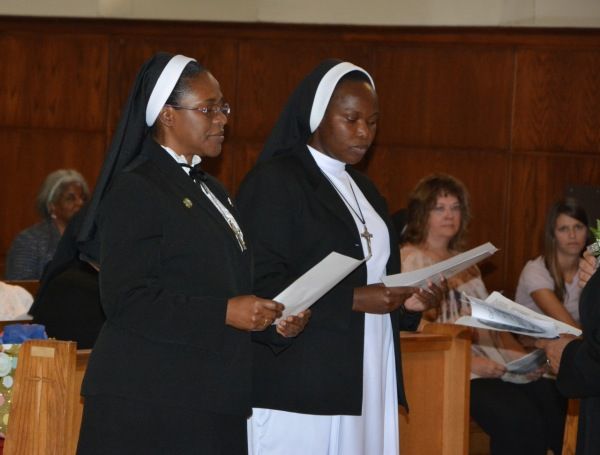
The Oblate Sisters of Providence (the First Black Community in the United States) was founded by Father James Joubert and Mother Mary Elizabeth Lange on July 2, 1829, in Baltimore, Maryland. In the lower chapel of old St. Mary’s Seminary, Fr. Joubert taught catechism to the children of African heritage. He found this a difficult task when faced with underprivileged children who could not read or write, they inspired him to organize a school and congregation of women devoted to teaching.
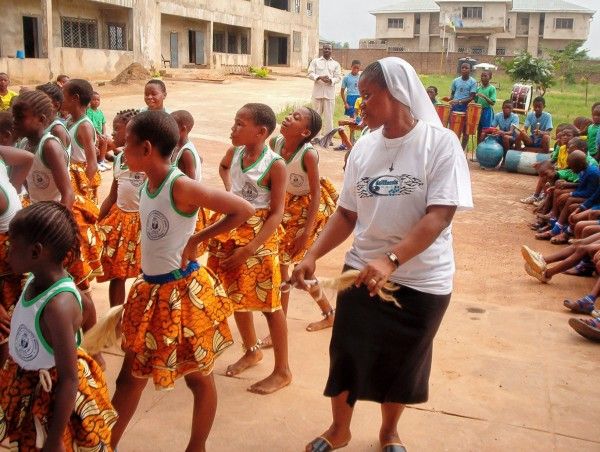
8. Missionary Sisters
9. Little Sisters of the Poor
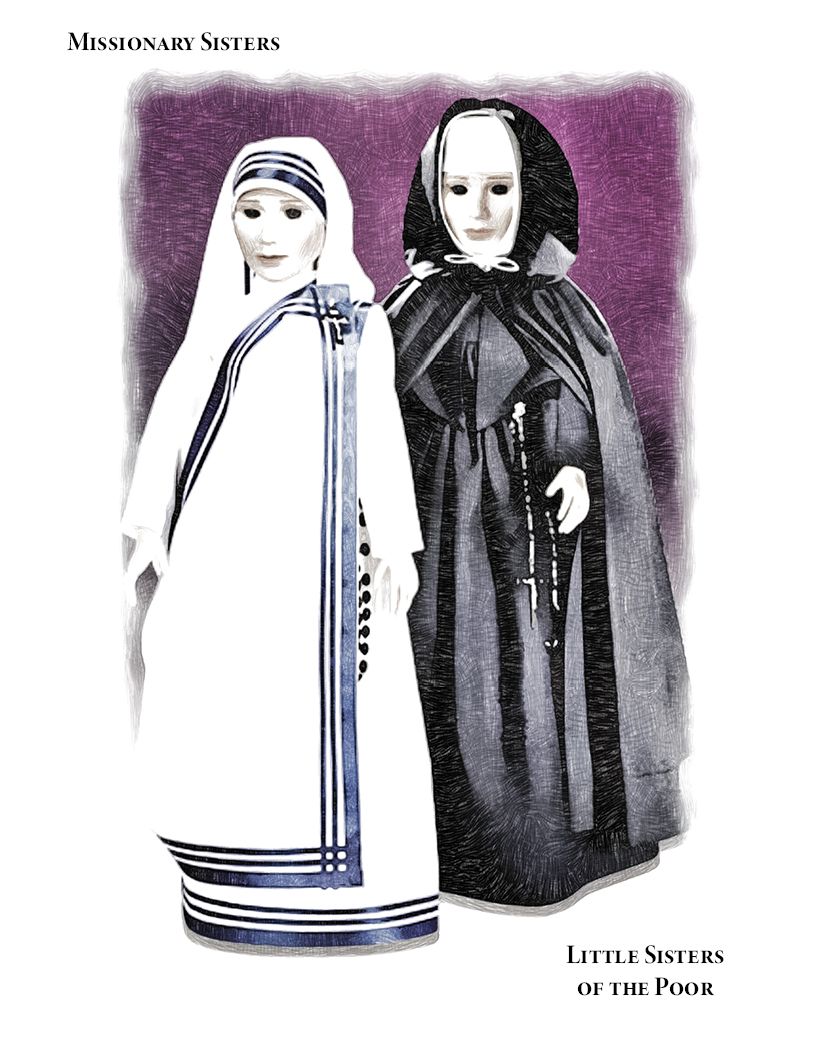
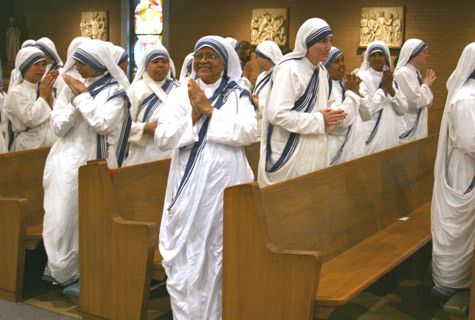
The Missionaries of Charity were founded in India in 1950, by Mary Teresa Bejaxhiu. The Sisters serve the poorest of the poor throughout the world. In the United States, they maintain five Centers of Formation, as well as many soup kitchens, shelters, camps for poor children, homes for the dying, and other ministries. The order survives on the Love of God and by donations given by persons of all faiths.
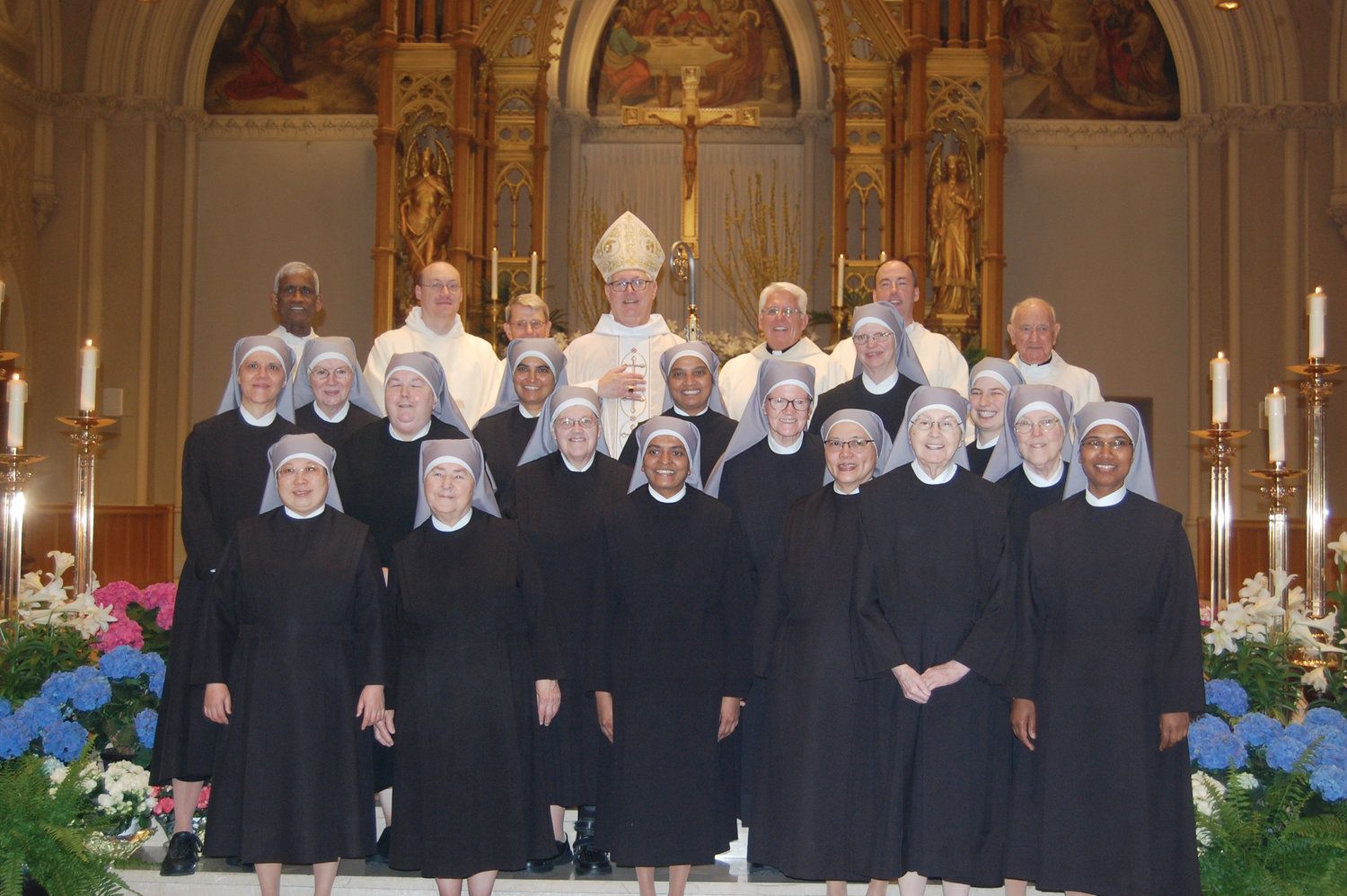
The Little Sisters of the Poor provided homes, and care for the aged poor. Inspired by the love of God and the love of His Poor, the Little Sisters of the Poor add to the vows of Poverty, Chastity, and Obedience the Vow of Hospitality. The black mantle is worn over the habit in the Chapel and when traveling. The headdress is a plain white bonnet with a forehead band as a symbol of obedience.
10. Daughters of Wisdom
11. Sisters of the Order of St. Benedict
12. Poor Clare Nuns
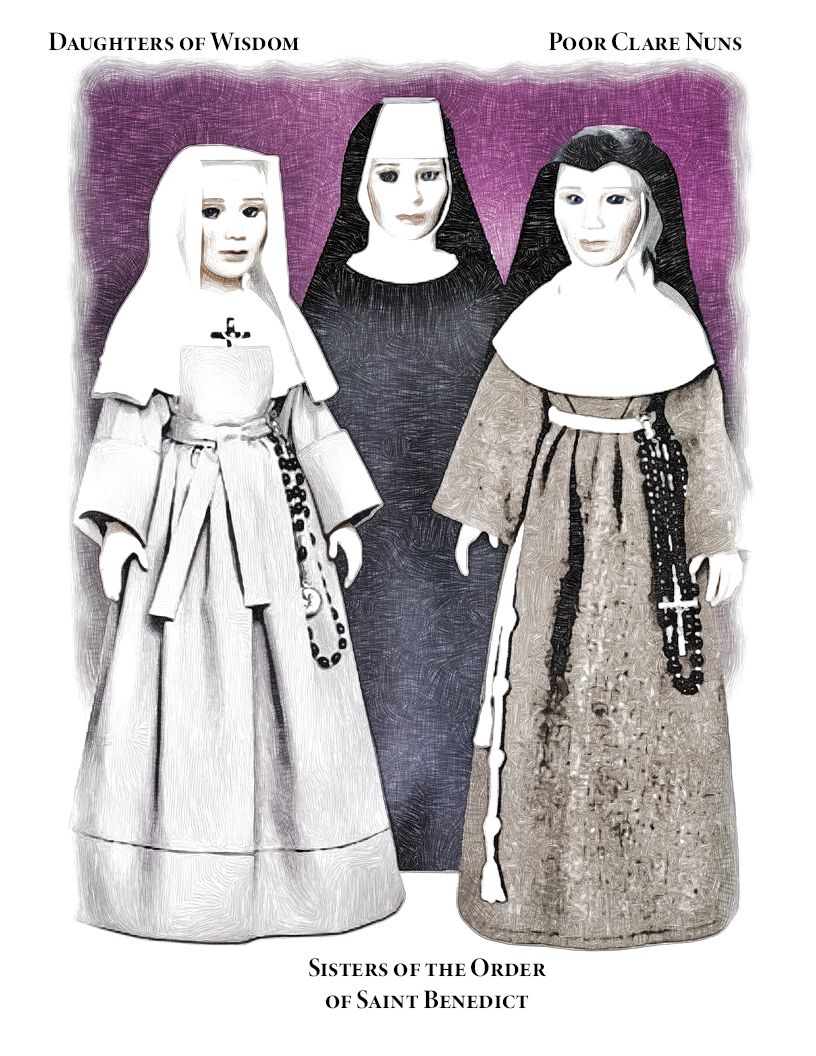
The Congregation of the Daughters of Wisdom was founded on February 2, 1703, by St. Louis-Marie de Montfort who invested Marie-Louise Trichet as the first Daughter of Wisdom. Their habit is made of coarse gray serge. A large linen handkerchief covers the shoulders, and a starched white linen headdress is worn instead of a veil. The habit became a symbol of Christ’s love as the sisters worked tirelessly among the poor and sick; later it became a symbol of faith and courage as the sisters mounted the scaffold to their deaths during the days of the French Revolution.
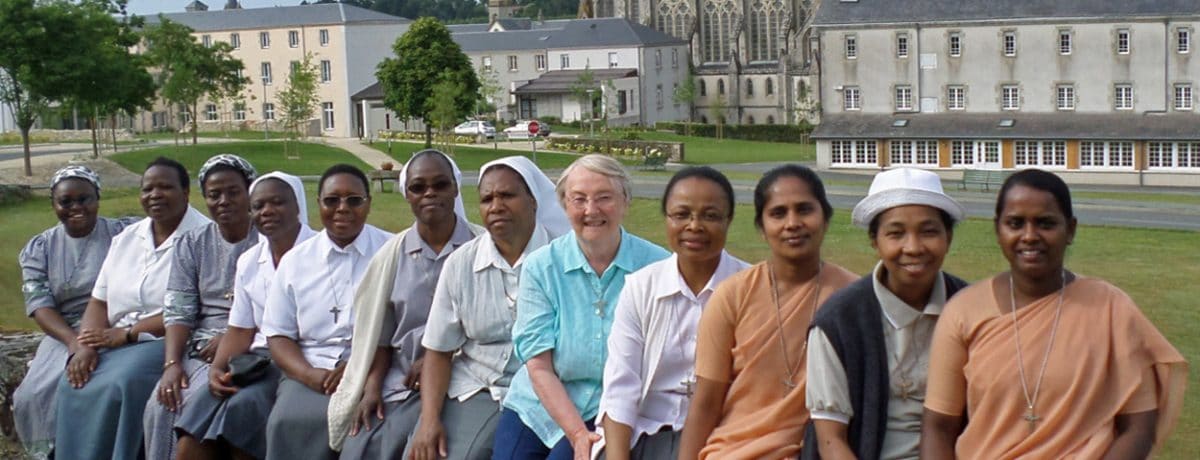
The Order of St. Benedict has its motto, “That in all things God may be glorified.” The order was founded by St. Benedict in the fifth century. The Benedictine Order is one of the world’s oldest religious orders and is found throughout the world. The first American congregation began at St. Mary’s Convent, Pennsylvania. Their life is contemplative with the sanctification of her soul through dedication to Christ.
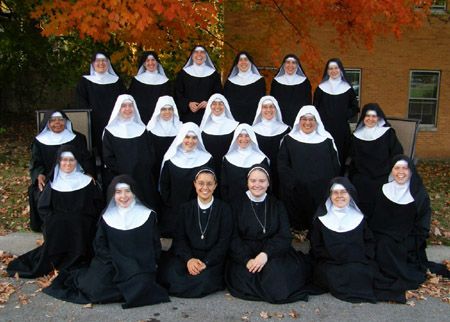
Saint Clare of Assisi (1194-1253), was the first Abbess of the Order of Poor Clares at San Damiano, Assisi, in Italy. At the age of eighteen, this young heroine vowed herself to the service of Jesus Christ and received her habit from Saint Francis of Assisi himself, in 1212. Thus was instituted the Order of Poor Clares, of the Second Order of St. Francis.
This site is a place where public domain paintings, stock photos, and coloring pages are stored, categorized, and made searchable. Anyone can come here and use the category page in the menu or the search bar to find the perfect Catholic image for their project. Did I mention that all the images are free and creative commons? That means that you won’t have to worry about copyright issues or stock photo fees.
If you’d like to keep this site free, all you have to do is give a one-time donation or subscribe monthly.
For more content like this, when it’s inspired, please subscribe to Coletha’s Youtube Channel: https://www.youtube.com/@mscoletha

 Ms Coletha's Blog