
DHS Announces Continued Efforts, Outlines Steps Taken to Address Best Practices in Law Enforcement Efforts
| When Dr. Martin Luther King Jr. was killed in Memphis Tennessee, Lyndon B. Johnson was President, born in Stonewall, Texas, meaning John F. Kennedy had already been killed in Dallas, Texas. |
| Henry Loeb III (December 9, 1920 – September 8, 1992) was an American politician of the Democratic Party, who was mayor of Memphis, Tennessee for two separate terms in the 1960s, from 1960 through 1963, and 1968 through 1971.[1] He gained national notoriety in his second term for his role in opposing the demands of striking sanitation workers in early 1968. He is the Mayor who caused Dr. King to be in Memphis and be assassinated. He was a Sagittarius. Dr. King was a Capricorn born on a Tuesday. |
| U.S. DEPARTMENT OF HOMELAND SECURITY Office of Public Affairs DHS Announces Continued Efforts, Outlines Steps Taken to Address Best Practices in Law Enforcement Efforts WASHINGTON – Today, the Department of Homeland Security (DHS) announced the formation of the Law Enforcement Coordination Council (LECC) – the Department’s first unified law enforcement coordination body – to comprehensively assess a broad range of law enforcement matters, including its law enforcement policies and training. The LECC, which will be chaired by Secretary Alejandro N. Mayorkas, will immediately begin comprehensive reviews that ensure more fair, equitable, and impartial policing, as well as officer and community safety. The LECC builds on several steps undertaken by DHS during the Biden-Harris Administration to promote best practices in its law enforcement activities. “Law enforcement is a noble profession. Its personnel honorably protect and serve our communities across the country, and they do so at great personal risk,” said Secretary Alejandro N. Mayorkas. “DHS is committed to ensuring our law enforcement personnel and our law enforcement partners have the training and tools to execute their mission, including by protecting civil rights, civil liberties, and privacy. The Law Enforcement Coordination Council will better enable the Department to combat current and future threats to our country, while ensuring the safety of both our law enforcement personnel and the diverse communities we serve.” The LECC includes the leadership of every DHS law enforcement Component, as well as leadership of DHS Headquarters offices with advisory and oversight roles, including the Office for Civil Rights and Civil Liberties (CRCL), Privacy Office, and Office of the General Counsel. The LECC will evaluate and respond to emerging law enforcement challenges and opportunities, comprehensively assess potential policy changes, facilitate information sharing, and promote best practices. The LECC will also coordinate closely with partners across every level of government, as well as with other key stakeholders. The LECC will immediately form two sub-committees. The first subcommittee will undertake a review of Department-wide and Component-specific use of force policies – including those that govern de-escalation tactics, the use of chemical agents such as tear gas, and less-than-lethal munitions – to ensure our law enforcement officers and agents continue to execute their mission appropriately and lawfully, including in a way that takes into account health and safety and is mindful of sensitive locations. The second subcommittee will undertake a review of law enforcement training techniques and curricula, adhering to a set of key principles that include a rigorous protection of civil rights and civil liberties and respect for privacy, a data-driven focus on preventing implicit bias, the promotion of standards that prohibit profiling and enhance de-escalation techniques, policies that support mental health, and strategies to increase trusted community engagement. These initiatives build on the Department’s longstanding commitment to continuously evaluate and improve its law enforcement-related practices and policies to ensure they are consistent with the law, align with best practices, and protect inalienable rights. # # # |
On 1 February 1968, two Memphis garbage collectors, Echol Cole and Robert Walker, were crushed to death by a malfunctioning truck. Eleven days later, frustrated by the city’s response to the latest event in a long pattern of neglect and abuse of its black employees, 1,300 black men from the Memphis Department of Public Works went on strike. Sanitation workers, led by garbage-collector-turned-union-organizer T. O. Jones, and supported by the president of the American Federation of State, County, and Municipal Employees (AFSCME), Jerry Wurf, demanded recognition of their union, better safety standards, and a decent wage.
October 4
Lee Patrick Brown
A child named Lee Patrick Brown; born on October 4, 1937 in Wewoka, Oklahoma to sharecroppers would eventually become mayor or one of America’s largest cities (Houston, Texas). Brown was elected the first African American mayor of Houston in 1997 and served the maximum three terms in office after elections in 1999 and 2001.

Serving as mayor was not his first major administrative responsibility; Brown in 1972 began work as Associate Director of the Institute for Urban Affairs and Research and a Professor of Public Administration at Howard University, in 1975 become the Sheriff of Mutnomah County, Oregon, Director of it’s Justice Services in 1976, Public Safety Commissioner of Atlanta, Georgia in 1978 (serving as the top law enforcement official during the Atlanta Child Murders) and the first African American Police Chief of the City of Houston, Texas from 1982 to 1990. In 1989 Brown received a job that moved him to the highest administrative rim of law enforcement in the country. New York City Mayor David Dinkins appointed Brown to become the first African American Police Commissioner of New York City. Later in 1993 he was unanimously confirmed by the United States Senate as Director of the Office of National Drug Control Policy (Drug Czar) under President Bill Clinton. These jobs properly prepared Brown for the top administrative job in Houston as it’s mayor. After high school Brown entered Fresno State University on a football scholarship where in 1960 he received a B.S. degree in criminology. He earned a master’s degree in sociology from San Jose State University and a second master’s and doctorate in criminology from the University of California, Berkeley.
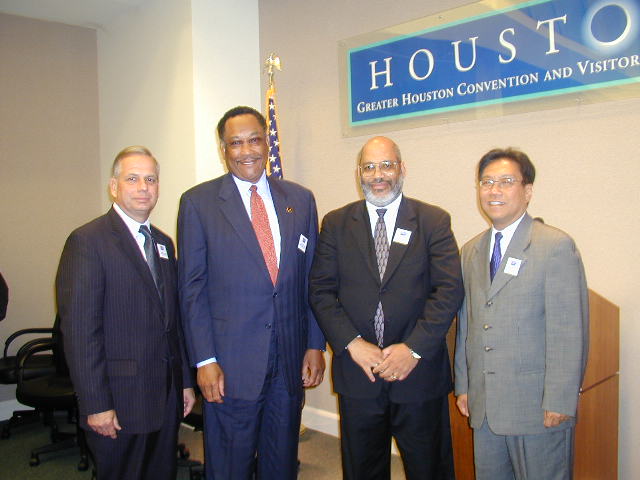
Good morning Mr. Lee P. Brown of Houston, Texas! I hope you are doing well today!
U.S. Department of Homeland Security
www.dhs.gov
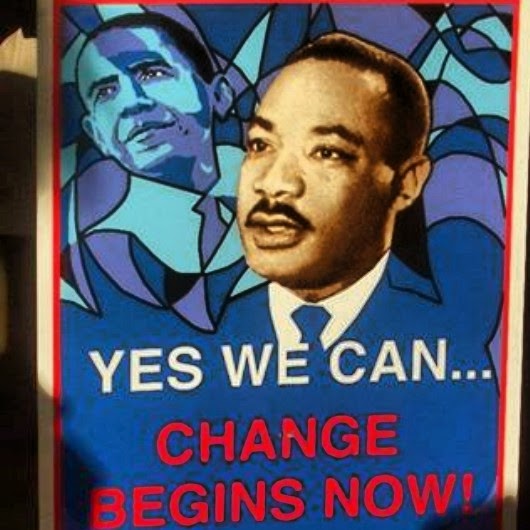
Safety First, Last and Always Psalm 91
https://daproductionstorage.blob.core.windows.net/media/story/video/534750
Happy Birthday Mr. Lee Patrick Brown, Many happy, healthy returns of the day!
 Ms Coletha's Blog